
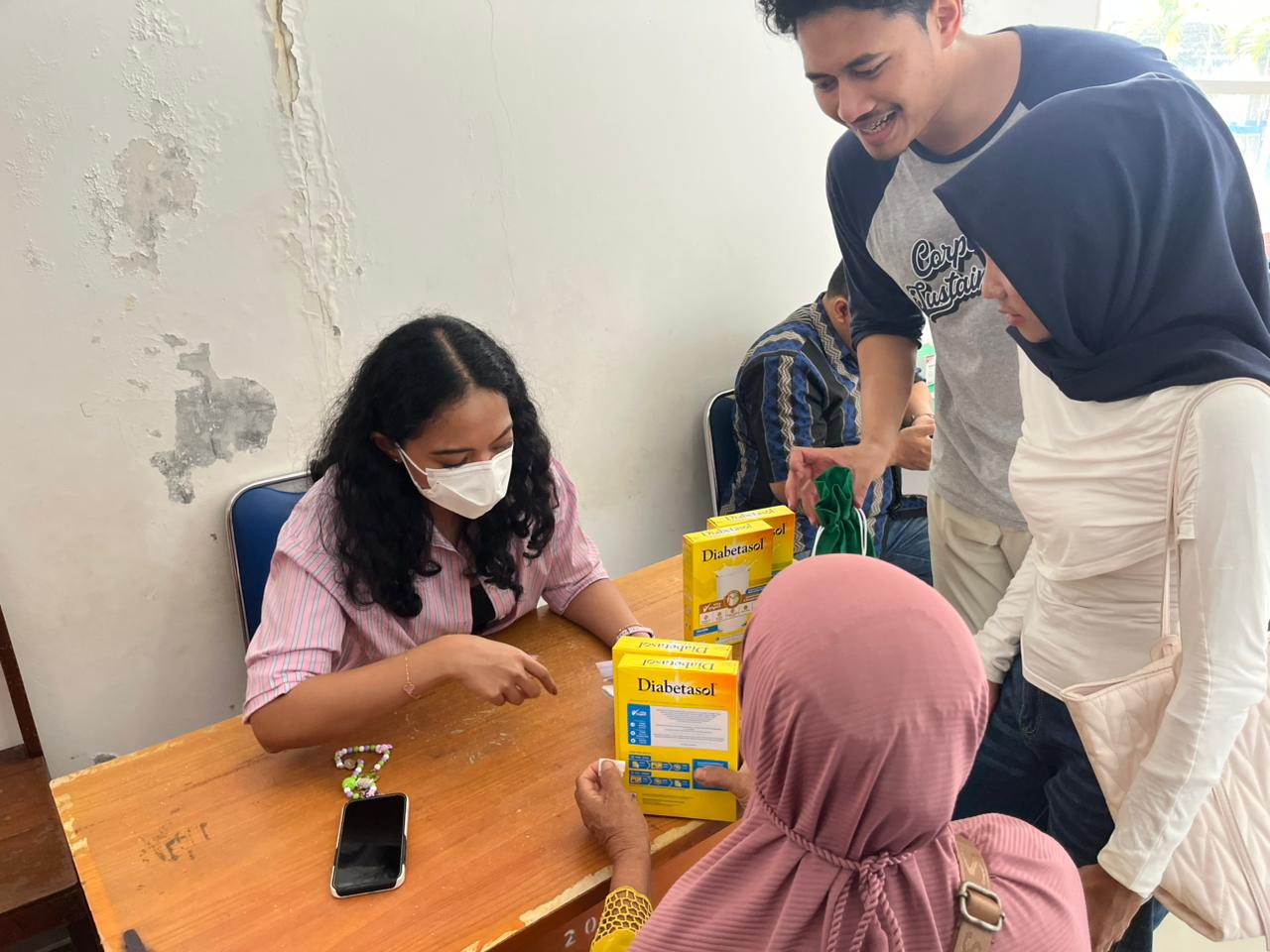
Kendari (27 April 2026) – PT Kalbe Farma Tbk (Kalbe) continues to promote public health through its support for the Semarak Dirgantara programme, which took place from 22 to 27 April 2026 in Kendari, Southeast Sulawesi. Kalbe is collaborating with a number of parties, including: the Indonesian Air Force (TNI AU), the Southeast Sulawesi Provincial Health Office, Kendari Bahteramas General Hospital, Poasia Wundumbatu Community Health Centre, academics, healthcare workers, and members of the community.
The prevalence of diabetes in Indonesia is showing an alarming trend. Results from the 2023 Indonesian Health Survey (SKI) indicate that the prevalence of diabetes, based on blood glucose tests among the population aged 15 years and over, reached 11.7%, an increase from 10.9% in 2018. Meanwhile, internationally, the International Diabetes Federation (IDF) Diabetes Atlas 2024 indicates that approximately 20.4 million people aged 20–79 in Indonesia are living with diabetes, with a prevalence of around 11.3%—or more than 1 in 9 adults.
Through the Diabetes Total Solution (DTS) ecosystem, Kalbe is driving an integrated and sustainable diabetes management ecosystem. The DTS ecosystem’s contribution to supporting diabetes prevention and treatment is evident through a number of initiatives. Firstly, education on healthy lifestyles to prevent diabetes. Secondly, early detection to identify diabetes risk from the outset. Thirdly, the provision of quality medicines and medical care. Fourthly, the consumption of specialised nutritional products to help maintain blood sugar levels. Fifthly, support for patients to manage their condition independently.
Kalbe’s Medical Executive, Dr Riesta Hanjani, stated that many members of the public have not yet received diabetes education.
“Many have never had their blood sugar checked. Some have been tested but do not seek treatment. They lack education. They are confused; they do not realise that high blood sugar is a factor preventing cataract surgery. Education must be provided, treatment must be followed, and diet must be managed,” explained Dr Riesta.
Dr Riesta also explained that many people have high blood sugar levels, which ultimately lead to a number of complications.
“As evidenced by our findings from blood sugar screenings prior to cataract surgery. Many patients were found to have high blood sugar, meaning the surgery could not proceed,” added Dr Riesta.
The approach to managing diabetes through the DTS ecosystem also reflects Kalbe’s commitment to supporting the spirit of Law No. 17 of 2023 on Health. This law highlights the importance of collaboration across various sectors in efforts to control non-communicable diseases (NCDs).
“Through the DTS ecosystem, Kalbe hopes to help reduce the burden on the national healthcare system by improving the quality of life for people with diabetes in Indonesia,” said SFD Arie Wibowo, Assistant Manager of Corporate Sustainability at Kalbe.
Meanwhile, Abi Nisaka, Head of Corporate Sustainability at Kalbe, stated that the DTS initiative is a tangible implementation of Kalbe’s commitment to sustainability under the ‘Bersama Sehatkan Bangsa’ programme.
‘By expanding access to healthcare and education, Kalbe strives to create a tangible positive impact for the wider community in order to achieve a healthier Indonesia,’ explained Abi.
In addition to diabetes education and support, Kalbe also runs healthcare access programmes, such as free eye examinations, the distribution of glasses to local schoolchildren, cataract surgery, and education on stunting and mental health.