
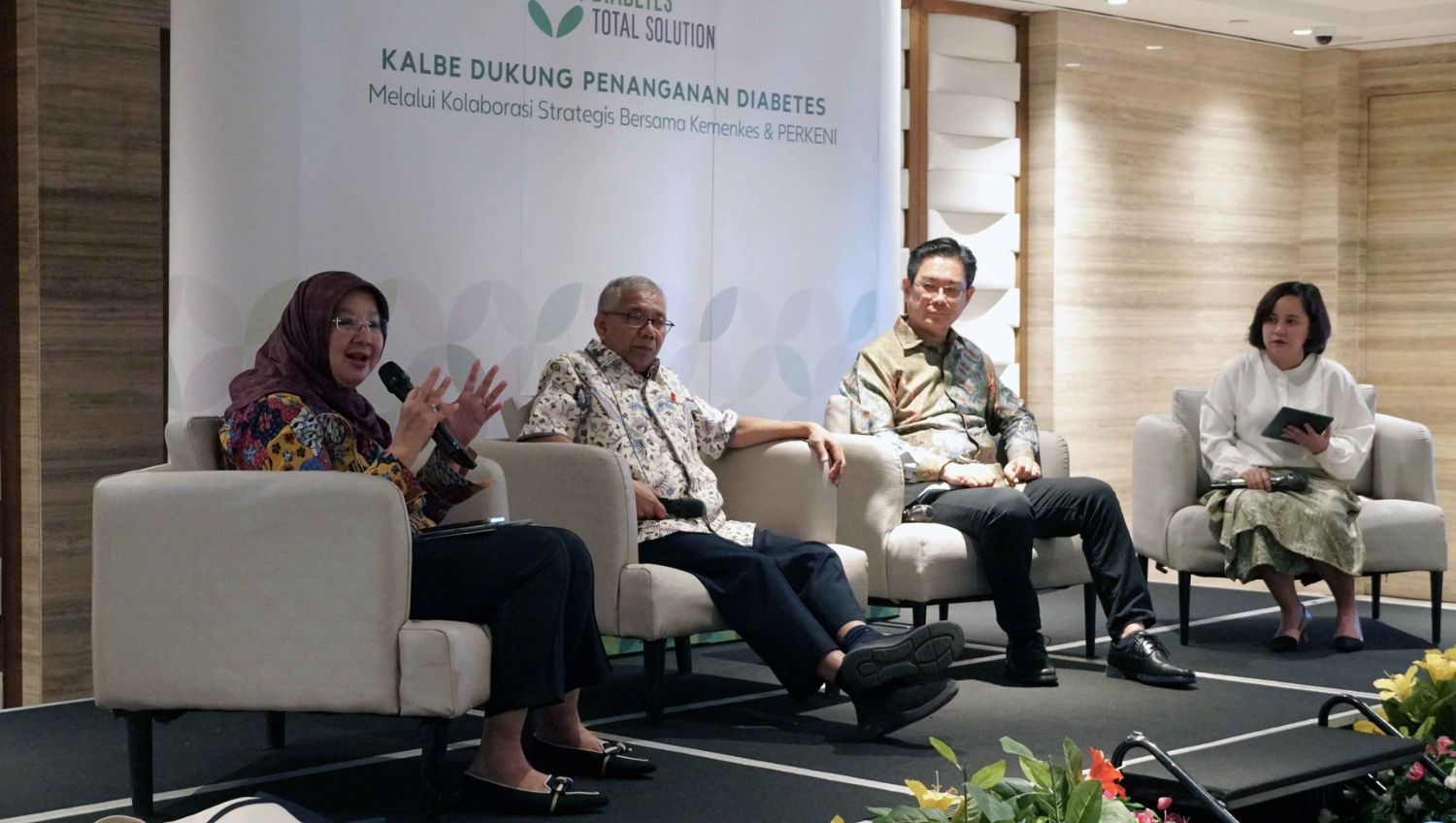
Jakarta, April 17, 2026 – PT Kalbe Farma Tbk (Kalbe) supports the strategic collaborations among the government, the health industry, academicians, and healthcare professionals plus the people to manage diabetes in Indonesia through an integrated and continuous approach. This step becomes a part of Kalbe’s commitment in facing the challenge of the rising prevalence of diabetes in Indonesia, which is at 10.9 percent based from the data of the 2018’s Riset Kesehatan Dasar (Riskesdas).
Kalbe believes that diabetes management requires an overall solution that does not solely focus on therapies, but also on education and prevention. This step is also in line with the Law No. 17 Year 2023 on Health, which emphasizes the importance in supporting the treatment of non-infectious diseases. Kalbe is committed to continue support the treatment of diabetes through an integrated and continuous solution.
“Kalbe consistently supports the expansion of access to health, the improvement of health independence and resilience in Indonesia. Diabetes management is not only done by one party. A synergy among the government, healthcare professionals, the industry, and the people is necessary. Thus, we continue to strengthen collaborations with various stakeholders,” says the Director of PT Kalbe Farma Tbk, Mulialie.
“One of Kalbe’s support comes in the form of an integrated diabetes management step, which is Kalbe Diabetes Total Solution, an integrated approach starting from the prevention, early detection, therapy, nutrition, continuous education within a health ecosystem. We believe that this integrated approach could bring broader impact for the people.“ Mulialie adds.
Diabetes is still one of the biggest health challenges in Indonesia. There were 20.4 million people with diabetes in Indonesia in 2024 – our country being in the fifth spot in the world in terms of the number of most people with diabetes. This condition shows that diabetes treatment requires serious attention from various parties. Besides, the trend of rising cases continue happening within the last few years. This strengthens the urgency of a more comprehensive and continuous urgency.
According to the result of the 2023’s Survei Kesehatan Indonesia (SKI), the prevalence of diabetes based on blood sugar check in people who are older than 15 years old reached 11.7 percent. This means that there were 30 million of people with diabetes in Indonesia, with only 10-15 million of them being diagnosed. The rising number does not only happen in seniors. Slowly but sure, diabetes starts to happen in people in their productive age and children. Lifestyle changes have become one of the main factors that contribute to this condition. The lack of physical activities and an imbalance eating pattern could make the risk higher. Therefore, people education has become an important step in managing diabetes.
The Director for Prevention and Control of Non-Infectious Diseases (Direktur Pencegahan dan Pengendalian Penyakit Tidak Menular/P2PTM) of the Ministry of Health of the Republic of Indonesia, dr. Siti Nadia Tarmizi, M.Epid., says that diabetes has brought a significant impact on national health system. Diabetes could result in another disease such as hypertension, and if it is not treated properly it could develop into kidney and heart diseases, cataracts, and other health conditions. She explains that the increase in diabetes cases is in line with the rising cost of health costs. BPJS’s data shows that there has been a rise of DM cases by 40% and kidney-failure-related costs by 476%. She thinks that promotive and preventative approaches would need to be strengthened. She also emphasizes the importance of roles that various parties play in supporting these approaches. With a strong collaboration, diabetes management could be done more effectively.
“Diabetres management needs a thorough downstreaming approach, starting from its risk factors, early detection, and treatment. The government continues to encourage the strengthening of healthcare services, especially the promotive and preventative measures. Education for the people has become one of the key elements in managing diabetes. Cross-sectoral collaborations are also highly required to extend the reach of programs. By having a good synergy, we could reduce the prevalence of diabetes in Indonesia,” dr. Nadia says.
She also highlights the importance of early detection, for many diabetes cases have not been diagnosed since their inception. She thinks that regular health check-ups would be an important measure in preventing diabetes. These would also reduce the risk of complications significantly. “Early detection is an important step in managing diabetes. Therefore, people would need to be more proactive in checking their health regularly. With a faster diagnosis, we could intervene in a more optimum way. This could also prevent more serious complications. Thus, continuous education would need to be given,” she adds.
Meanwhile, the Chairman of PB PERKENI (Perkumpulan Endokrinologi Indonesia – The Indonesian Society of Endocrinology), Prof. Dr. dr. Em Yunir, SpPD, K-EMD, FINASIM., states that people’s understanding of this disease still needs to be improved. On the other hand, diabetes is a chronic disease that would require long-term management. Lifestyle changes make up an important part in diabetes management.
“Diabetes does not merely talk about blood sugar levels, it is also linked to the risks of long-term complications. Therefore, its management must be done thoroughly. Patients need to understand the importance of healthy lifestyles and the obedience to treatments. Education is an important factor in supporting the success of therapies. With proper management, patients could stay productive,” Prof. Yunir explains.
“The prevention of diabetes would need to be done since early by building people’s awareness on risk factors. Regular screening is an important step to detect this condition since its early stage. With the right intervention, the risks of complication could be put at minimum in a significant way. Continuous education would be the main foundation in managing diabetes in Indonesia,” he concludes.